
Introduction
When most people think of restaurants, they imagine sizzling dishes, clinking glasses, and lively conversations. What they rarely see is the financial engine behind the scenes: restaurant accounting and bookkeeping. Every plate served, tip paid, and invoice cleared shows up somewhere in the numbers—and those numbers determine whether the doors stay open next month. Whether you own a small café, a neighborhood diner, or manage a fine‑dining concept, strong bookkeeping is the ingredient that turns passion into a sustainable business.
Why restaurants struggle with the numbers
The restaurant world moves fast. That same pace can quickly create financial chaos if money is not tracked carefully.
- High transaction volume and cash handling
Even in a card‑first world, many U.S. restaurants still handle a lot of cash, making daily reconciliation more complex. - Perishable inventory
Food spoils, gets wasted, or is given away—unless inventory is tracked closely, profits leak out silently. - Complex labor costs
Wages, tips, overtime, and benefits can spiral without disciplined scheduling and payroll processes. - Seasonality and demand swings
Holidays, weekends, local events, and weather can cause revenue to spike or drop dramatically. - Thin margins
A small misstep in food costs, pricing, or payroll can wipe out an entire month’s profit.
Without accurate restaurant bookkeeping and accounting systems, it is possible to run a packed dining room and still end up with an empty bank account.
Bookkeeping: the backbone of restaurant finances
Bookkeeping may not feel as exciting as crafting a new menu, but it is what keeps the business alive long term.
Key practices include:
- Daily sales reconciliation
Every dine‑in, takeout, delivery, and online order should tie back to POS reports and deposits. - Detailed expense tracking
Vendor invoices, utilities, rent, marketing, uniforms, and subscriptions must be recorded promptly so small leaks do not become big losses. - Accurate payroll and tip reporting
Restaurants depend on staff; paying them correctly and staying compliant with tip‑reporting rules is non‑negotiable. - Tight inventory control
Tracking what is received, used, and wasted helps keep food‑cost percentages in line and supports better menu pricing. - Cash‑flow monitoring
Even a profitable restaurant can fail if cash runs short before payroll or rent is due. Regular cash‑flow review prevents unpleasant surprises.
With consistent bookkeeping, owners gain a clear view of financial health and can make better decisions about pricing, staffing, and growth.
The restaurant chart of accounts: your financial menu
Think of the chart of accounts (COA) as a financial menu that organizes every transaction into logical “sections.”
A well‑designed COA for restaurants typically includes:
- Revenue categories
Food sales, alcoholic and non‑alcoholic beverages, catering, events, and delivery‑platform income. - Operating expenses
Rent, utilities, marketing, cleaning, repairs and maintenance, POS and software, and general overhead. - Labor costs
Hourly wages, salaries, overtime, payroll taxes, and employee benefits. - Other expenses
Licenses, permits, professional fees, insurance, bank fees, and interest.
When the chart of accounts is tailored to restaurant operations, reports become easier to read and tax season becomes far less stressful.
Essential restaurant accounting metrics
To keep a finger on the financial pulse, restaurants should track a few key metrics:
- Prime cost (COGS + labor)
Often targeted at roughly 60–65% of sales; it shows whether the biggest controllable costs are under control. - Food cost percentage
Helps test whether menu prices and portion sizes are aligned with ingredient costs. - Gross profit margin
Shows how much is left after direct costs to cover overhead and profit. - Break‑even point
The level of sales needed to cover all fixed and variable costs. - Cash burn rate
Indicates how fast reserves are being used during slow periods. - Table turnover rate
Reveals how efficiently seating and service are managed during busy shifts.
Together, these KPIs show whether the kitchen is truly profitable or slowly leaking money.
Common restaurant accounting mistakes
Even experienced restaurateurs can fall into avoidable traps, such as:
- Mixing personal and business expenses in the same accounts.
- Ignoring petty cash and small “miscellaneous” purchases.
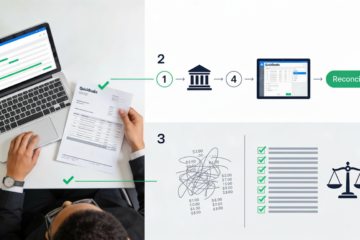
- Not matching POS totals against bank deposits and merchant statements.
- Mishandling payroll taxes, service charges, or tip allocations.
- Leaving bookkeeping until tax season—like cleaning the kitchen only once a year.
Addressing these habits early protects margins and reduces stress when auditors or lenders ask for records.
How technology simplifies restaurant bookkeeping
Modern tools have made restaurant accounting much easier to manage. Today’s software can connect with POS systems, payroll platforms, bank feeds, and delivery apps, automating much of the data flow.
Well‑chosen systems can:
- Pull daily sales directly from POS into accounting.
- Sync vendor bills, inventory usage, and payroll details automatically.
- Generate real‑time profit‑and‑loss, prime‑cost, and cash‑flow reports.
With automation in place, owners spend less time on manual entry and more time on improving guest experience and operations.
Why outsourced restaurant bookkeeping is a quiet advantage
Many owners start out doing the books themselves. As the restaurant grows, the time and expertise required increase dramatically. Outsourcing bookkeeping to specialists who understand restaurant finances often becomes the more cost‑effective and reliable option.
Benefits include:
- Access to professionals familiar with restaurant‑specific issues like food costing, tips, and seasonal trends.
- Consistent monitoring of sales, payroll, and vendor expenses.
- Regular management reports and forecasts instead of just year‑end summaries.
- Stronger compliance with tax and labor regulations.
The result is fewer surprises, cleaner books, and more confident financial decisions.
Closing thought: balancing plate and profit
Opening a restaurant usually starts with a passion for food and hospitality. Keeping it open requires an equal passion for the numbers. With solid restaurant accounting and bookkeeping practices—supported by the right tools and, when needed, expert help—owners can turn busy services into healthy cash flow.
In the end, successful restaurants master three kinds of balance: balance on the plate, balance in the books, and balance in how they grow.